Did you know that a single winter fire once cut the population of Post Falls by nearly half in just two months? On December 30, 1902, fire destroyed the mill plant of the Idaho Lumber and Manufacturing Company, the business that stood at the very center of this young town. The Illustrated History of North Idaho, published the following year, called Frederick Post's mill "the life of the town," and the weeks after the fire showed just how true those words were.
The mill that burned had passed through several hands since Post completed it early in 1880. Post sold the operation in 1894 to the Spokane and Idaho Lumber Company, of which H. M. Strathern was president and J. M. and C. Patterson were the other members. In November 1901, Daniel McGillis and Chester D. Gibbs of Milwaukee, Wisconsin, purchased the Patterson interests, and in December of that same year the company took a new name, the Idaho Lumber and Manufacturing Company, with Strathern continuing as its president. Barely a year later, its plant was gone.
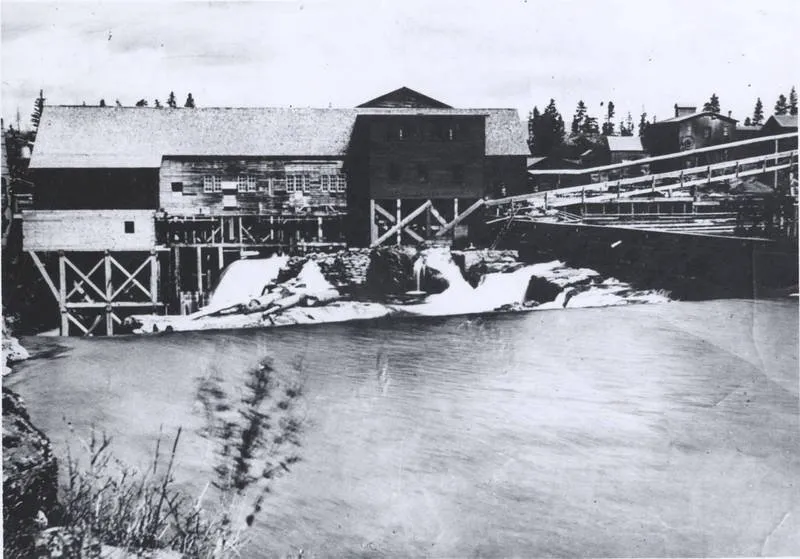
By the standards of its day, this was no small country sawmill. The 1903 history records that the mill could cut seventy thousand feet of lumber in twenty-four hours, and the plant was valued at eighty thousand dollars, against which the company carried fifty-seven thousand dollars of insurance. Connected with the mill were a planing and lath mill and a sash and door factory, so logs that arrived at the falls could leave Post Falls as finished building material. The site itself was prized: just above the falls the Spokane River runs wide and deep with a slow current, logs were floated down the river from Lake Coeur d'Alene, and the boom there could hold fifteen million feet of logs at one time. The history judged it the finest mill site in Kootenai County, thanks to the immense water power and the excellent boom facilities.
The human cost of the fire appeared quickly. At the time of the fire, Post Falls had a population of six hundred. Two months later, the history reports, the population was but little more than half that number. Families whose livelihoods depended on the mill could not wait indefinitely for a decision about rebuilding, and many moved on. It remains one of the clearest measures in the town's early record of how completely a mill town's fortunes rose and fell with a single employer.
When the history was written, definite arrangements for rebuilding had not yet been completed, although it judged that another mill would probably be erected on the site. Milling did endure at the falls for decades afterward: a Post Falls Lumber Company sawmill was still standing above the dam and falls in a photograph dated 1946, preserved today in the University of Idaho Library. The fire of 1902 ended one company's plant, but it did not end the sound of saws at Post Falls, the sound the town itself was built upon.