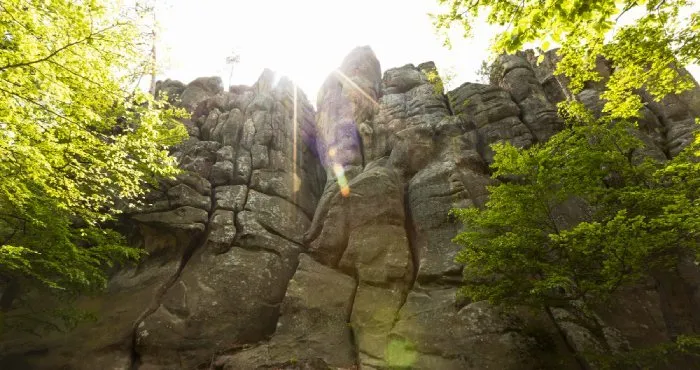
At the end of a short, easy trail in the middle of Post Falls sits one of the most storied rocks in North Idaho — a massive granite boulder that gave Treaty Rock Park its name.
According to local tradition, the rock marks an 1871 agreement between Chief Seltice of the Coeur d'Alene Tribe and Frederick Post, the German immigrant who would give the town its name. The story goes that Seltice granted Post rights at the falls, and to commemorate the event, Post chiseled his name — Frederick Post — and the date, June 1, 1871, into the rock, while tribal members painted various figures on its face.
The rock carries both petroglyphs carved into the stone and pictographs painted on it. Archaeologists first recorded the site in August 1966, and the University of Idaho's Keo Boreson completed a detailed rock-art site form in May 1974. In 1989, Boreson returned for a more extensive investigation sponsored by the Post Falls City Council and the Post Falls Historical Society.
What did the science conclude? The National Park Service nomination form is refreshingly honest: it is simply not known whether the inscriptions and paintings represent the 1871 agreement, or whether Post's name and the date were added later to figures already on the outcrop. Studies of rock samples tentatively suggested the petroglyphs were made at the same time, but after the pictographs were painted. One painted figure — a human mounted on a horse — suggests the image dates to after the mid-1700s, when horses were introduced to the region. The question of whether Treaty Rock truly records the agreement between Post and the Coeur d'Alene Tribe remains unanswered.
Whatever the truth of the legend, the rock's significance was enough for it to be placed on the National Register of Historic Places in 1992. Today the inscription is protected under plexiglass, with interpretive signs installed around the rock explaining the treaty story and the site's archaeology.
Treaty Rock Park itself is a four-acre city park with the Treaty Rock Historical Loop, an easy 0.3-mile trail that winds through pine and sagebrush. The trail is mostly paved and makes a fine quick outing — a place where Post Falls' founding legend is, quite literally, written in stone.