Skip to header Skip to main navigation Skip to main content Skip to footer
Home
Post Falls Idaho
Where Nature Welcomes You Home

Main navigation

  • Home
  • Dining
  • Lodging
  • Shopping
  • Things to Do
  • Outdoors
  • History
  • Business Directory
  • Webcams
  • 7-Day Weather Forecast (opens in new tab)

Idaho History

Sixty Years to the Day: Frederick Post's Final Anniversary in Post Falls
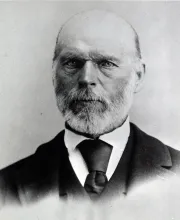
Black-and-white portrait photograph of Frederick Post, founder of Post Falls, taken around 1900.

Did you know the founder of Post Falls died on his sixtieth wedding anniversary? Frederick Post was married to Margaret Hilt on August 7, 1848, and he passed away on August 7, 1908, exactly sixty years later. By then he had spent thirty-eight years in the Northwest, long enough to watch a rough mill settlement at the falls on the Spokane River grow into the incorporated town that still carries his name.
  • Read more about Sixty Years to the Day: Frederick Post's Final Anniversary in Post Falls

The Knife Company That Chose Post Falls: Buck Knives Arrives in 2005

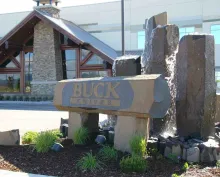
The Buck Knives stone sign and lodge-style entrance of the company's Post Falls plant at 660 South Lochsa Street.

Did you know one of America's best-known knife makers picked Post Falls for its future? In 2005, Buck Knives moved its headquarters and its only plant from San Diego, California, to Post Falls. It was a defining moment in the town's modern growth — not another subdivision, but a family-owned manufacturer putting down roots, bringing jobs with it, and betting that a small North Idaho city was the right place to keep making things in America.

  • Read more about The Knife Company That Chose Post Falls: Buck Knives Arrives in 2005

The Park the City Claimed in 1989: Corbin Park and the Swift Side of the River

Did you know Post Falls has a river park that local families were enjoying long before the city ever owned it? Corbin Park, tucked along the north bank of the Spokane River at the south end of Corbin Road, downriver from Falls Park, was a favorite local spot for decades before it became an official city park. Its story is a quieter chapter of the river's history — not dams or mills, but neighbors claiming a piece of wild shoreline for themselves, one picnic at a time.

  • Read more about The Park the City Claimed in 1989: Corbin Park and the Swift Side of the River

One Brick Building, a Century of Downtown: The Many Lives of the Chapin Building

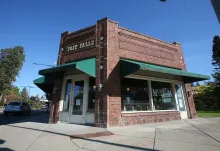
The brick Chapin Building at Fourth Avenue and Spokane Street in downtown Post Falls, now home to the Post Falls Museum

Did you know one small brick building on a downtown corner has been, in turn, a drugstore, a grocery, a teen dance hall, a laundromat, a police station and a museum? That is the Chapin Building at 101 East Fourth Avenue, at the corner of Fourth Avenue and Spokane Street on the Post Falls City Hall campus. Few places tell the story of downtown Post Falls through the decades as neatly as this one building does, because as the town changed around it, the building simply changed jobs — and kept serving the same neighbors.

  • Read more about One Brick Building, a Century of Downtown: The Many Lives of the Chapin Building

A Line Across the Water: How the Tribe Kept the Southern Third of Its Lake

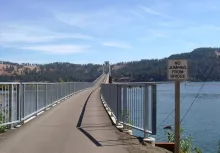
The Trail of the Coeur d'Alenes bridge crossing Lake Coeur d'Alene at Chatcolet, on the southern part of the lake.

Post Falls sits on the Spokane River below Lake Coeur d'Alene, and the lake upstream was the heart of a much older homeland. The Coeur d'Alene Tribe, the Schitsu'umsh, once inhabited more than 3.5 million acres in what is now northern Idaho and northeastern Washington, including the lake and the St. Joe River. Members used the lake and its waterways for food, fiber, transportation and cultural activities, and depended on the submerged lands themselves, from water potatoes harvested from the lakebed to fish weirs anchored in the riverbeds.

  • Read more about A Line Across the Water: How the Tribe Kept the Southern Third of Its Lake

Before Post Falls Had a Name: The Summer Mullan's Road Reached the Falls

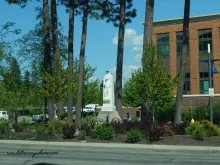
The marble statue of Captain John Mullan outside Post Falls City Hall in Post Falls, Idaho.

Ten years before Frederick Post ever saw the falls that would take his name, an Army road crew swung axes and spades along the Spokane River where Post Falls now stands. On June 3 and 4, 1861, soldiers and hired laborers under Captain John Mullan built this stretch of road on their way east around the north end of Coeur d'Alene Lake. There was no town here yet - just the river, the falls, and the farms of the Coeur d'Alene people, whose leader, Chief Seltice, Mullan described in his notes as frank, honest, and friendly.

  • Read more about Before Post Falls Had a Name: The Summer Mullan's Road Reached the Falls

Three Dams in Two Years: How Post Falls Built Its Powerhouse River

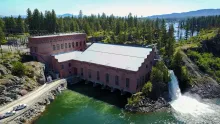
Aerial view of the historic red-brick Post Falls powerhouse on the middle channel of the Spokane River, with water falling beside it.

Did you know Post Falls Dam is not really one dam at all? About nine miles downstream from Coeur d'Alene Lake, the Spokane River splits into three channels, each with its own natural falls, before the channels rejoin below the gorge. To harness that drop, builders had to dam all three channels at once, and the brick powerhouse they raised in the middle channel in 1906 is still generating electricity today.

  • Read more about Three Dams in Two Years: How Post Falls Built Its Powerhouse River

A Slicer in a Field: Idaho Veneer's 67 Years in Post Falls

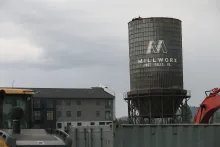
The preserved Idaho Veneer hog fuel silo, now branded Millworx, rises beside new buildings on the former mill site in Post Falls

Did you know one of Post Falls' longest-running mills began with a single machine in an open field? Idaho Veneer Company dates to 1953, when, in the company's own words, it plunked down a slicer in the middle of a field in northern Idaho and began slicing knotty Idaho white pine and other species from the Pacific Northwest. There was no downtown around it then, and no Interstate 90 corridor rushing past. There was a family business, a log yard, and thin sheets of veneer peeled and sliced from North Idaho timber.

  • Read more about A Slicer in a Field: Idaho Veneer's 67 Years in Post Falls

The Inventor Who Read Rivers: Frederick Post Before Post Falls Had a Name

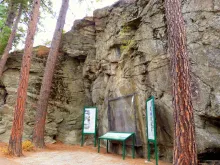
Treaty Rock in Treaty Rock Park, Post Falls, its granite face holding the plexiglass-protected inscription panel flanked by interpretive signs and ponderosa pines.

Long before this town carried his name, Frederick Post had already spent a lifetime learning what moving water could do. Born in Germany in 1821, he married at twenty-six and crossed the Atlantic in 1848 with his new wife, Anna Margaret Hild, settling in Illinois. If Post had a genius, the Museum of North Idaho says, it was his feel for the power hidden in a flowing creek or river, and he put that gift to work for more than two decades before he ever saw Idaho.

  • Read more about The Inventor Who Read Rivers: Frederick Post Before Post Falls Had a Name

From 1,069 to 38,485: The Boom That Remade Post Falls

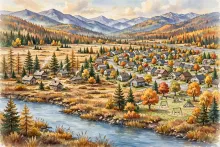
Cartoon illustration of Post Falls growing from a few early riverside cabins into a neighborhood town with a park, prairie, river, and mountains.

Did you know that within living memory, Post Falls was a town of barely a thousand people? The 1950 census counted just 1,069 residents here. The count rose to 1,983 in 1960 and to 2,371 in 1970, but this was still a small mill town on the Spokane River, the kind of place where the falls, the timber work, and a compact downtown shaped daily life. For decades, growth had come in fits and starts, tied to mills, rails, and the river.

  • Read more about From 1,069 to 38,485: The Boom That Remade Post Falls

Pagination

  • Previous page ‹‹
  • Page 3
  • Next page ››
Subscribe to Idaho History

Copyright © 2026 Rocky Mountain Madman LLC - All rights reserved

Developed and Designed by Rocky Mountain Madman LLC